Subsurface & Locating
Ground-Penetrating Radar (GPR)
Radar imaging of pipes, voids and saturation underground.
Serving BC since 1999
Non-invasive detection
Insurance-ready reports
Rapid response across BC
What is ground-penetrating radar (gpr)?
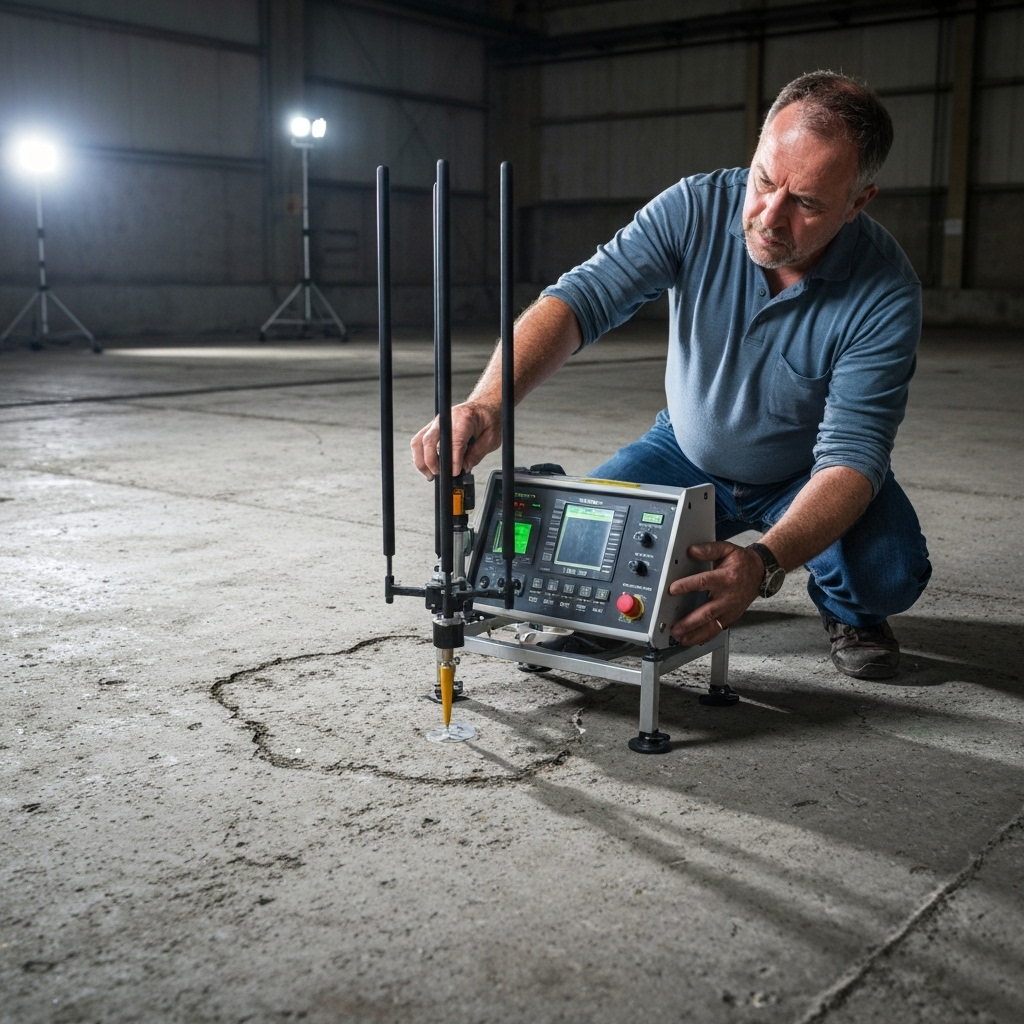
Ground-Penetrating Radar transmits radio pulses into concrete or soil and images the reflections, revealing buried pipes, rebar, conduit, voids and zones of saturation. It is invaluable for planning a safe excavation — locating utilities so they aren't struck, and confirming the wash-out a leak creates around a line.
How it works
- 1The GPR antenna is passed over the surface in a grid.
- 2Reflections map the depth and path of buried features.
- 3Voids and saturated soil produce distinct signatures.
- 4We mark utilities and the suspected leak zone.
Advantages
Images both metallic and non-metallic pipes
Estimates depth before digging
Reveals voids and wash-out
Protects against striking utilities
Where we use it
GPR — FAQs
Can GPR find plastic pipes?
Yes — unlike electromagnetic locating, GPR images non-metallic pipes and voids as well as metal services.
Does GPR find the leak itself?
It maps the pipe, depth and any surrounding wash-out; we pair it with acoustics, which find the leak's sound, for a complete picture.
Other detection technologies
Infrared Thermal ImagingHigh-resolution infrared cameras that map moisture by temperatureInfrared Roof Moisture ScanningThermal surveys that reveal wet insulation under flat roofsThermal Radiant-Loop MappingSee in-floor heating loops and find their cold-spot faultsAcoustic Leak DetectionSensitive listening equipment that hears escaping waterLeak-Noise CorrelationTwo sensors and math that calculate a leak's exact positionGround Microphone SurveyingSurface listening to localise buried leaks point by point
Put the right technology on your leak
Call 604-239-9934 — serving British Columbia since 1999.